Oil leaks are frustrating because the drip you see is rarely the true source. Oil runs downward, spreads sideways, and gets blown backward while you drive. By the time it hits the driveway, it may have traveled across multiple surfaces. The goal is to find the highest point of fresh oil and confirm the real source before you start replacing parts.
The good news is that tracking a leak is usually a process. If you do it in the right order, you can narrow it down without wasting money on parts the engine did not need.
Start With The Simple Stuff First
Before you chase anything complicated, confirm what fluid you are seeing. Engine oil is usually brown to black and feels slick. Transmission fluid is often red or amber. Power steering fluid can look similar on some vehicles, so smell and location help. If you are not sure, do not assume, because it is easy to chase the wrong system.
Check the oil level too. If the dipstick is dropping quickly, treat it as urgent. A small seep is annoying. A fast leak can put the engine at risk.
Clean The Area So Fresh Oil Stands Out
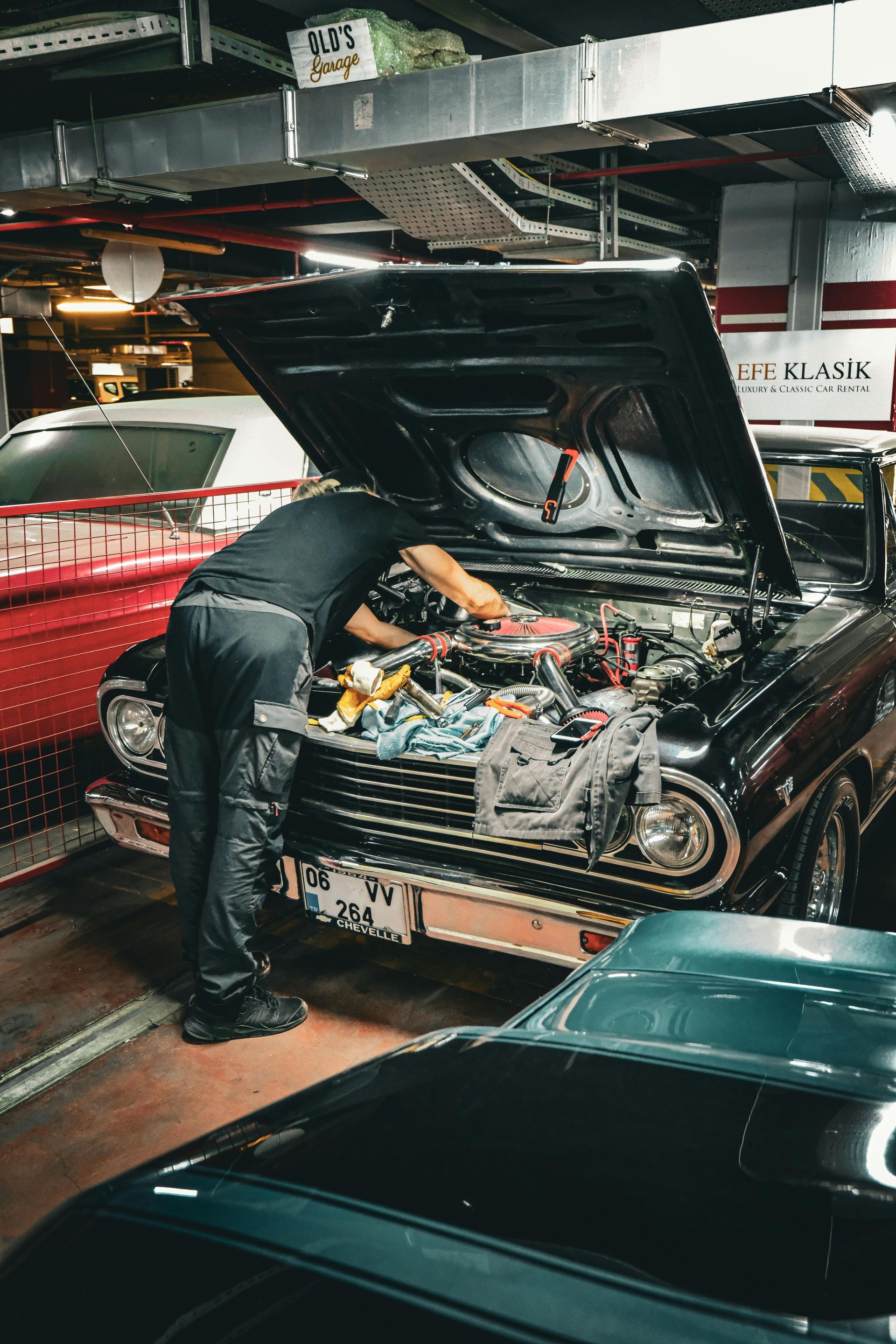
A dirty engine makes leak tracking nearly impossible. Old oil and road grime hide new seepage. Cleaning suspected areas gives you a clean baseline so you can actually see where oil starts. You do not have to make the engine spotless, but the heavy buildup needs to come off.
This step also makes the next inspection more accurate. Once the surfaces are clean, you can tell whether oil is starting at a gasket seam, a housing edge, or a fitting.
Look For The Highest Wet Point
Oil flows down, so start your inspection from the top when you can. Look around the valve cover edges, the oil fill area, and the back of the engine, where oil can run down onto the transmission housing. Then work your way lower.
A wet oil pan does not automatically mean the oil pan gasket is leaking. Oil from above often ends up coating the pan. The highest fresh wetness is usually the best clue.
Use Heat And A Short Drive To Reveal The Leak
Some leaks only show up when the engine is hot. Oil thins as it warms, pressure rises, and seepage becomes more obvious. If you clean the area and let the car idle for a minute, you might not see anything. A short drive often makes the leak show itself.
After the drive, park on a clean surface and check again with good light. If you now see fresh wetness, you are much closer to the real source.
Two Simple Tricks That Make Leaks Easier To Find
If the leak is slow or hard to see, a couple of simple methods can help you confirm the exact path without guessing.
- UV dye and a UV light: dye is added to the oil and glows at the leak path
- Leak tracing powder: lightly dust a cleaned area, and fresh oil leaves a clear trail
These are especially helpful when oil is landing on hot parts and burning off before it drips.
Common Leak Sources Worth Checking Early
Once you have a clean baseline, there are a few common leak points that are worth checking right away. These areas are frequent offenders and often explain why the underside gets messy.
- Valve cover gaskets and spark plug tube seals
- Oil filter housing or oil cooler seals
- Oil pan gasket and drain plug sealing surface
- Front crank seal area behind the crank pulley
- Rear engine seal area where the engine meets the transmission
This list is not a parts shopping list. It is a reminder of where leaks often start once you can see clearly.
Why The Lowest Drip Point Can Fool You
A lot of people assume the leak is at the lowest point they can see. That is a common mistake. Oil can travel along brackets and seams and finally drip from the lowest edge of a cover or the bellhousing area. That makes big repairs sound more likely than they really are.
This is why the topmost wet point matters. If you start at the bottom, you can end up blaming the wrong seal and missing a smaller leak above it.
When It Is Time To Book Service
If the leak is severe, if oil is hitting the exhaust and creating smoke, or if the oil level is dropping quickly, it is time to get it repaired. Oil leaks can become safety issues when they create burning smells, smoke, or slippery residue under the car.
It is also smart to book service if the leak source is buried, or if you suspect more than one leak. Older engines can have multiple seep points, and fixing only the most obvious one can make the next one easier to notice.
How Regular Maintenance Helps Prevent Leak Surprises
Leaks are easier to handle when they are small. A quick undercar check during regular maintenance visits often catches seepage before it coats everything. It also helps to avoid overfilling oil and to keep the PCV system healthy, since excess crankcase pressure can push oil past seals.
Staying consistent with inspections keeps oil leaks from becoming that ongoing mess that never seems to stop.
Get Engine Oil Leak Repair In Peabody, MA With Autobahn Performance, Inc.
If you’re seeing oil spots or smelling burning oil, the next step is to book service so the leak can be traced and repaired correctly.
Schedule service with Autobahn Performance, Inc. in Peabody, MA, to stop the oil loss, protect the engine, and keep a small seep from turning into a bigger mess.