A car ahead stops suddenly, and you press the brake pedal as quickly as you can. Yet the vehicle travels a surprising distance before coming to rest. That movement happens in two distinct stages: the time before you begin braking and the distance covered while the brakes slow the wheels. Understanding both helps explain why following distance and tire condition are equally important.
Reaction Distance Comes Before the Brakes Engage
Reaction distance is how far your vehicle travels between the moment a hazard becomes relevant and the moment you begin braking. Your brain has to recognize the danger, choose a response, and move your foot to the pedal. During that interval, the car continues moving near its original speed. The distance depends on vehicle speed and your actual reaction time, which changes with alertness and conditions.
At 60 mph, a vehicle travels about 88 feet each second. A hypothetical 1.5-second reaction interval therefore adds roughly 132 feet before braking begins. That isn't a fixed reaction time for every driver or situation. Fatigue, distraction, poor visibility, and unexpected events all change it. The important lesson is that a faster vehicle covers more ground while the driver is still deciding what to do.
Braking Distance Starts After You Apply the Pedal
Braking distance is the ground traveled from the start of effective braking until the vehicle stops. Tires need grip against the road so brake force can slow the car. Brake condition, pavement friction, vehicle load, gradient, and speed all influence the result. Anti-lock brakes help manage wheel lockup and preserve steering control during demanding stops, but they don't cancel the physical limits of tire traction.
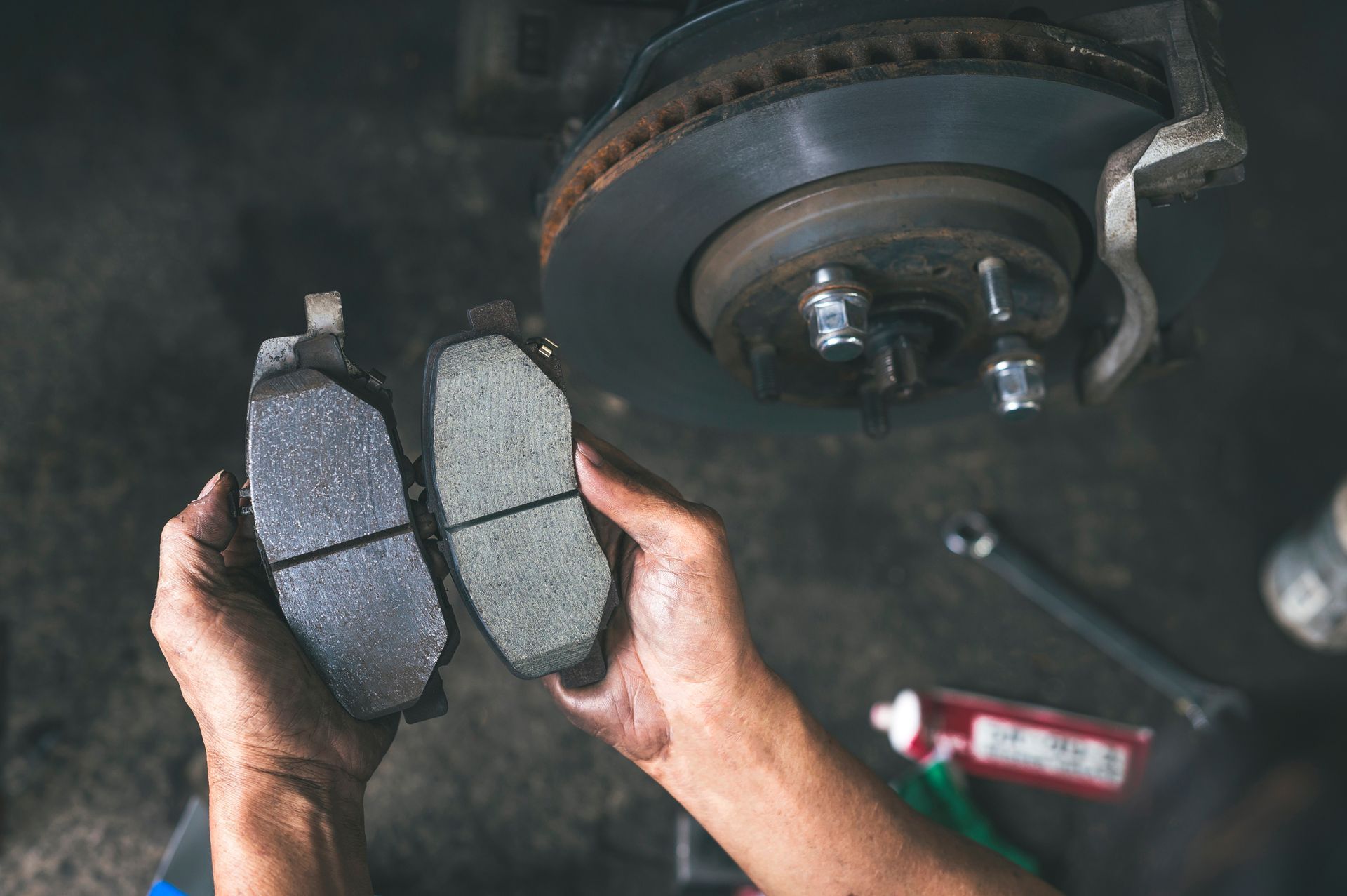
A properly working brake system performs within its design, yet stopping distances still change between dry pavement, rain, gravel, and snow. Worn tires and low grip reduce the available braking force. An inspection examines pad and rotor condition, hydraulic operation, tires, and related concerns when stopping performance changes. New brake pads won't make a slick road behave like a dry one. The whole tire-to-road connection determines how effectively braking force becomes deceleration.
Total Stopping Distance Combines Both Stages
Total stopping distance includes the distance traveled before braking starts and the distance covered during braking. In a simplified situation, the relationship is reaction distance plus braking distance. That is why a driver who looks down at a phone can travel farther before even using an otherwise healthy brake system. The vehicle's mechanical stopping capability hasn't changed, but the total space required to avoid the hazard has increased.
Consider a following gap that seems comfortable at a moderate speed. If traffic ahead suddenly stops, you need enough space to recognize the event and then slow down safely. A distance that works on one road or day may be inadequate in poor weather. We encourage drivers to select following gaps according to road conditions and visibility, not an exact number copied from a single example. The margin needs to accommodate real-world variation.
Speed Raises Both Distances in Different Ways
Reaction distance rises approximately in proportion to speed for a fixed reaction time. Double the speed, and you travel roughly twice as far before braking begins. Braking distance behaves differently. Under simplified conditions with the same available deceleration, it increases approximately with the square of speed. Doubling speed can require about four times the braking distance once braking starts.
Real vehicles don't deliver perfectly constant deceleration across every surface, so those relationships are teaching tools, not guarantees of an exact stop. A loaded SUV descending a grade needs different space from an unloaded sedan on level, dry pavement. Speed limits set legal maximums under stated conditions, not a promise that every posted speed is safe in fog or heavy rain. Slowing early gives both your reaction and braking phases more room.
Tires, Brakes, and Alignment Affect the Mechanical Stage
A tire with adequate tread and correct inflation is better equipped to develop traction than one that's damaged or badly worn. Poor alignment and defective suspension parts sometimes change tire contact and handling, while dragging or uneven brakes can affect the vehicle's response. Brake fluid, hoses, and friction components also require service according to their condition and the manufacturer's instructions. These mechanical issues can lengthen or destabilize braking.
Report these observations during inspection:
- The brake pedal feels soft or travels farther
- The car pulls during ordinary stops
- Tires show severe uneven wear
- Braking produces grinding or heavy vibration
- The ABS or brake warning remains illuminated
We inspect the relevant components and explain which findings affect safe braking. Maintenance supports predictable performance, but it can't recover the distance lost to a delayed reaction. Driver awareness and mechanical condition work together, with separate responsibilities.
Create More Space Before an Emergency Happens
Look far enough ahead to notice brake lights and changing traffic patterns, maintain a following gap that fits conditions, and avoid driving while distracted or exhausted. Don't test maximum stopping ability on public roads or attempt an abrupt maneuver to demonstrate a theory. A controlled response begins with staying alert and preserving space. If a hazard develops, brake and steer according to the vehicle's design and your training.
If the car's braking behavior changes, arrange a professional inspection before relying on it for demanding driving. Mechanical faults need specific repairs and verification afterward. Reaction distance reminds us to protect our focus, while braking distance reminds us to protect our tires and brakes. Understanding the difference makes following-distance decisions more realistic and helps explain why speed and visibility have such a strong effect on safety.
Get Brake and Tire Safety Inspection in Peabody, MA, With Autobahn Performance, Inc.
Autobahn Performance, Inc. in Peabody, MA helps drivers review brake performance, tire condition, and handling symptoms. We explain the inspection findings and the recommendations supported by the vehicle's condition.
Call
Autobahn Performance, Inc. or schedule an appointment online.